

3.The Architect’s Draft: From Internal Vision to Executed Strategy
In the early 20th century, two explorers embarked on a quest to be the first humans to reach the South Pole. Their stories serve as a powerful allegory for leadership. Robert Falcon Scott led a valiant, tragic expedition, relying on convention, hope, and determination. Roald Amundsen, in contrast, relied on meticulous, exhaustive planning.
Before his boots ever touched the Antarctic ice, Amundsen had already completed the journey hundreds of time on paper. He rigorously studied Inuit survival techniques, calculated caloric needs, and pre-planned every supply depot with ruthless precision. He chose dogs over ponies, a decision born from research, not sentiment. Amundsen’s journey was scripted on paper long before it was etched in ice. Scott’s was driven by a vision; Amundsen’s was driven by a blueprint. Both had the same goal, but only the leader with the written script achieved it and returned safely.
This is the fundamental difference between wishing for a result and commanding it. Great leaders are architects of the future, and their most crucial blueprints are not born in meetings, but are forged in quiet contemplation and given form through the written word. This is where the leadership journal becomes your most indispensable strategic tool. It is where you move from intention to execution.
Beyond a Diary: The Journal as a Strategic Workspace
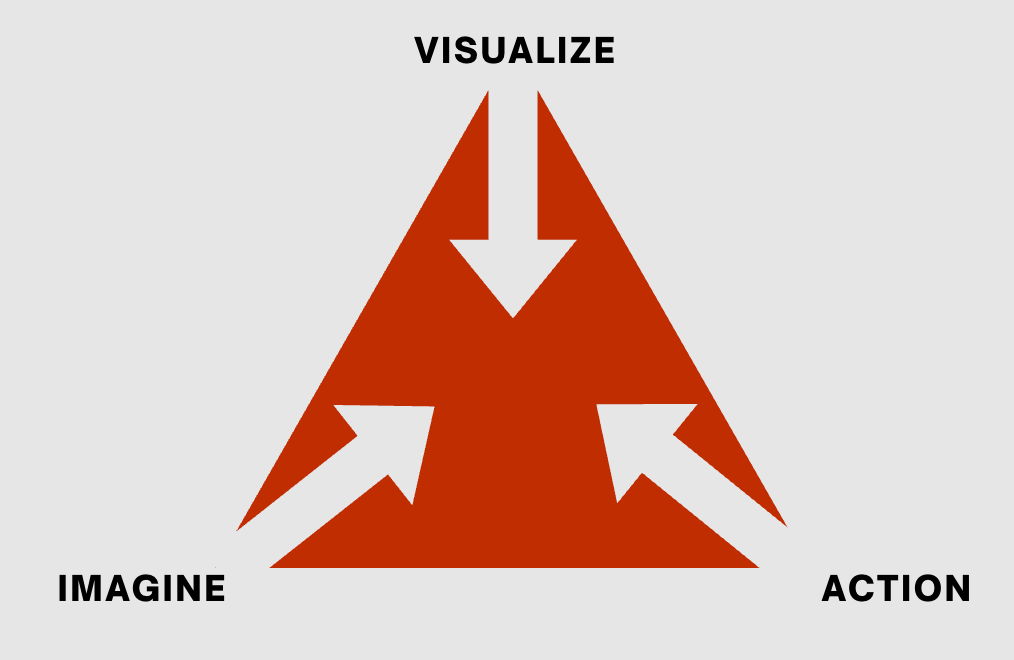
A leader’s journal is not a diary for recording feelings. It is a crucible for thought; a private workspace to forge clarity, pressure-test strategies, and codify commitment. The physical act of writing transforms the abstract into the concrete, a process I call the V.I.A. Connection.
Visualization: This is the what. It’s the unwavering picture of the desired outcome—the successful turnaround, the breakthrough product, the high-performing, cohesive team.
Imagination: This is the how. It’s the creative exploration of pathways. For Amundsen, this was imagining every possible point of failure—a broken ski, a sick dog, a whiteout blizzard—and scripting the response. For a leader, it’s brainstorming strategies, anticipating market shifts, and mapping out scenarios.
Activation: This is the essential bridge from thought to action. Visualization and imagination are powerless until they are anchored to the real world. You activate your vision by writing it down. This act of ‘inking the idea’ does more than create a psychological commitment; it forges the ‘what’ and the ‘how’ into a cohesive, executable plan. It is the first, most critical step in making a vision real.
Just as an architect’s blueprint guides the construction of a skyscraper, your journal entries become the authoritative plans that guide your team’s actions and your own.
The S.P.R. Framework: Structuring Your Leadership Log
The most effective plans are models of clarity and focus. To that end, I have refined this journaling practice into a simple yet powerful framework. It is built on three pillars that force you to distill your thinking into an executable strategy. For any vision, plan, or challenge, structure your journal entry by answering these three questions.
1.Simplicity (The Clarity Test)
Guiding Question: Can I describe this vision or plan in a single, compelling sentence that anyone on my team can understand and repeat?
Complexity is the enemy of execution. Simplicity is the hallmark of a leader who has achieved true clarity. John F. Kennedy’s 1961 declaration, “We choose to go to the moon in this decade,” was a masterclass in this principle. He didn’t detail the rocketry or the orbital mechanics; he provided a destination and a deadline. The vision was so simple and powerful it mobilized a nation.
In your journal, write this simple, declarative statement. This is your North Star.
2. Priority (The Alignment Test)
Guiding Question: Why must we do this now? How does this align with our larger organizational purpose?
Leadership is the art of strategic focus. This question forces you to justify the deployment of your team’s most valuable asset: its focus. It demands that you connect your plan to the bigger picture, ensuring your team isn’t just busy, but busy with what matters most. Answering the “why now” provides the mission-critical context that fuels deep motivation and resilience. This practice sharpens your strategic acumen, training you to see the entire chessboard, not just the next move.
In your journal, articulate the priority. Link it directly to a core business or team objective.
3. Responsibility (The Accountability Test)
Guiding Question: What is my specific role in making this happen, and what is the very first action I must take?
A vision without a champion is an orphan. This final question instills ownership. It anchors the grand plan to a starting point and assigns the most critical role to you, the leader. By defining your personal accountability and identifying the immediate next step, no matter how small ensures you convert passive planning into active leadership. This step breaks inertia and creates the initial momentum required for any great undertaking.
In your journal, state your ownership and define your immediate, tangible first action.
Putting It Into Practice
Let’s imagine you are leading a project that is struggling to meet its objectives due to a shift in the market. A pivot is needed. Here’s what an S.P.R. journal entry might look like:
Plan: Pivot the ‘Alpha Project’ for Market Realignment
S (Simplicity): We will refocus the Alpha Project to deliver a smaller, core feature set that solves our customers’ most pressing new problem by the end of this quarter.
P (Priority): We must do this now because continuing on the current path will deliver a product the market no longer wants, wasting six months of work. This pivot aligns with our company’s core value of customer-centricity and our strategic need to be agile.
R (Responsibility): My role is to clearly and confidently communicate this change and protect the team from external distractions. My first action is to schedule a 30-minute all-hands meeting for tomorrow at 9 AM with a single agenda item: “The New Focus for Project Alpha.”
This structured entry transforms a vague sense of “we need to change” into a clear, actionable, and defensible leadership plan. Re-reading this, you are not just reminded of a goal; you are re-connected with your own strategic thinking. Your journal becomes your most trusted advisor, the silent partner in your growth, and the undeniable record of how you learned to architect the future.
Checkpoint Summary
Visualization – See the outcome.
Imagination – Map the steps.
Activation – Plan and Take one action.
Use journaling to:
Draft your vision
Evaluate your decisions
Refine your leadership
Apply the 3 filters:
Simplicity – Can your team understand it quickly?
Priority – Is this the most important thing?
Responsibility – Are you accountable for seeing it through? Having ownership?